 Skip to content
 Mandala Art Book for Artists: Advanced Techniques, Creative Patterns & Pro Tips for Artistic Mastery
Recent Blog


Mandalas have long been recognized…

Mandala art has quietly become…
There’s a point in every mandala journey where coloring stops being “just relaxing” and starts becoming… art. You begin noticing your own habits: where your shading looks flat, where your patterns feel repetitive, where your color choices don’t match the vibe you had in your head.
That’s a good sign. It means you’re ready to level up without losing the calm that drew you to mandalas in the first place.
If you’re new to mandalas or want a broader foundation (history, symbolism, and why mandalas work so well for mindfulness), start with our pillar post here: Complete Mandala Guide Book: The Ultimate Handbook for Mandala History, Symbolism, Art & Techniques.
This blog is the next step: a more advanced, artist-focused guide designed for people who want mandalas to look more polished, more dimensional, and more “gallery-ready” while still keeping the process peaceful and enjoyable.
And that’s very much the philosophy of Lico’s Collection: peace isn’t forced. It’s allowed—one breath, one colored line, one simple choice at a time.
Why Mandalas Are a Perfect Skill Builder for Artists
Mandalas are basically a built-in art training system. Because they repeat shapes in a structured way, they strengthen:
- Precision (small sections train control fast)
- Composition (symmetry teaches balance naturally)
- Consistency (repetition reveals what’s working and what isn’t)
- Color intelligence (limited spaces force better decisions)
So if you’ve been looking for a mandala art book for artists that helps you grow your skills without making the process feel heavy, mandalas are one of the most rewarding formats you can practice.
Advanced Technique #1: Value (Light vs. Dark) = Instant Depth
If you want your mandalas to look professional, value is the secret sauce.
Most people think, “What color should I use?”
Artists think, “How light or dark should this be?”
Here’s a simple way to practice:
- Pick one color family (like blue).
- Choose three shades: light, medium, dark.
- Repeat the same value pattern around the circle.
Pro tip: Dark on the outer edge + lighter toward the center creates a natural “glow” that makes the whole mandala feel dimensional.
Advanced Technique #2: Layering + Burnishing for Rich, Smooth Color
Layering is how you get that soft, expensive-looking finish.
- Start with gentle pressure
- Build 3–5 layers
- Burnish at the end (press firmly with a light pencil, blender, or white)
This removes the scratchy look and gives your mandala a polished, velvety surface, especially with colored pencils.
Advanced Technique #3: Blending Without Making Everything Look “Mushy”
Blending is beautiful… until everything blends the same way and the design loses contrast.
Try blending only your “feature areas”:
- the center motif
- the main petals
- one hero ring
Keep the rest crisp and clean. That mix—soft + sharp—is what makes mandala art feel intentional.
Advanced Technique #4: Micro-Details That Make Your Work Pop
If you ever look at someone’s mandala and think, “How does it look so finished?” it’s usually tiny details.
Add these at the end:
- dotwork (pointillism) for texture
- tiny highlights with a white gel pen
- thin shadows on the edges of petals or shapes
These take minutes but completely change the final result.
Pattern Mastery: How Artists Create Mandalas That Feel Original
A lot of mandalas use the same “alphabet” of shapes: petals, arcs, diamonds, triangles, leaves, and dots.
Originality comes from a combination.
Try this pattern-building method:
- Ring 1: petals
- Ring 2: triangles
- Ring 3: leaves
- Ring 4: dotwork + arcs
- Ring 5: diamonds
Even if each ring is simple, the overall composition feels fresh because the visual rhythm changes.
Artist trick: Repeat one motif three times across the mandala (like dots in the center, middle, and border). The brain reads that repetition as harmony.
Color Strategy for Artists (Easy, Not Overthinking)
Use the 60–30–10 rule:
- 60% main color family
- 30% supporting color
- 10% accent color (“spark”)
This prevents rainbow overload and makes your work look cohesive.
Pro tip: Add one neutral (cream, warm gray, soft brown) to give the eye a place to rest. Mandalas can be visually intense—neutrals make them feel elegant.
Where Lico’s Collection’s Books Fit in the Artist Journey
Here’s the honest truth: artists improve fastest when they have structure and repetition.
That’s why Lico’s Collection created two books that work like a skill-building system:
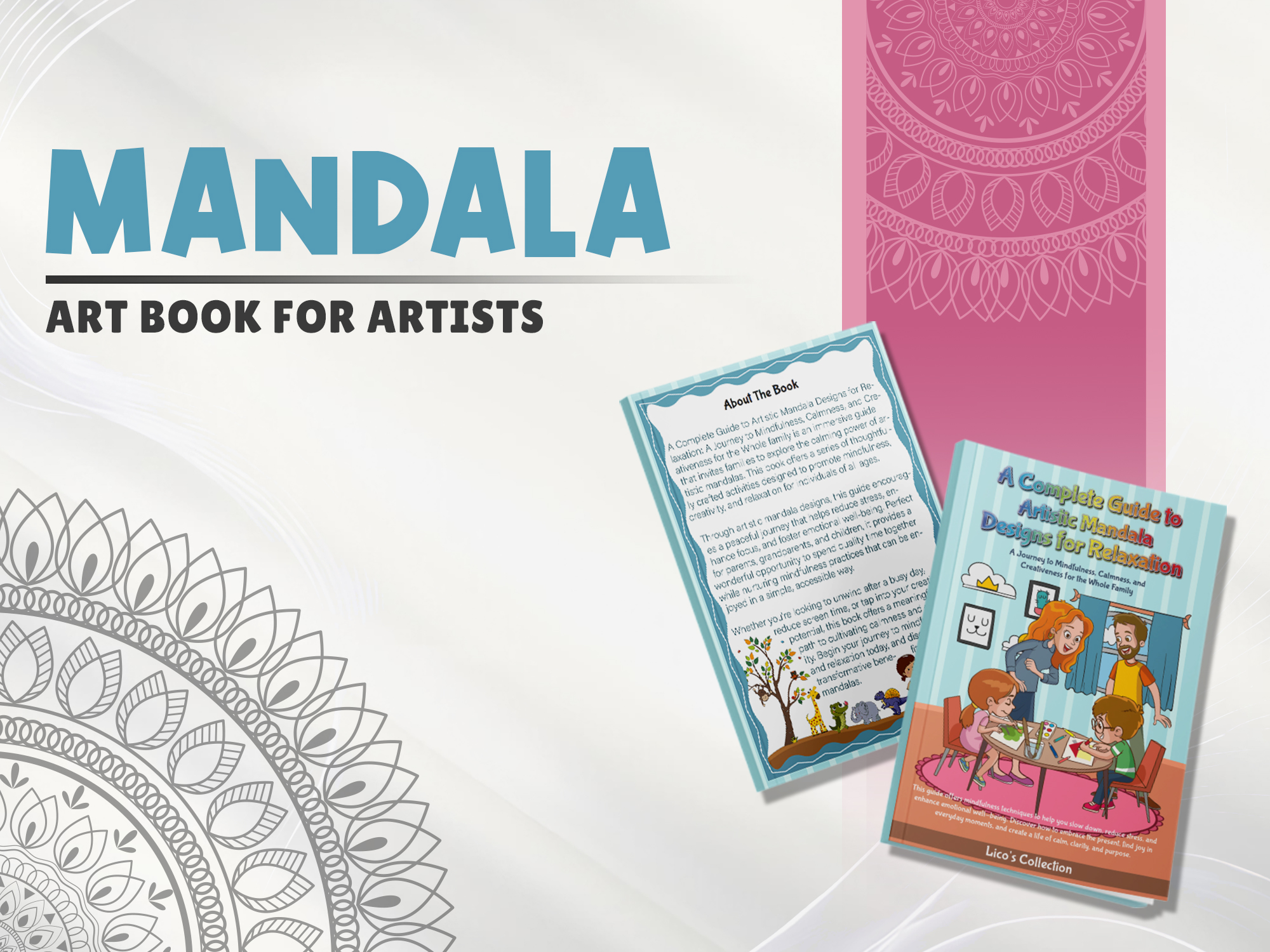
- A Complete Guide to Artistic Mandala Designs for Relaxation: A Journey to Mindfulness, Calmness, and Creativeness for the Whole Family helps you understand the method behind mindful mandala art—techniques, reflection, breathing cues, and ways to build consistent practice.
- A Complete Guide to Artistic Mandala Designs for Relaxation: A Coloring Book Journey to Mindfulness, Calmness, and Creativity for the Whole Family gives you the practice space: 100+ designs so you can train your hand, experiment with color, and try new techniques without staring at a blank page.
If you want the most calming way to build skill, the combination works beautifully: learn the approach, then practice it daily.
And yes—if you’ve been searching for the best mandala art book for artists, this “guide + practice” pairing is exactly what helps people stick with it.
If Your Goal Is Deep Calm While Practicing Skill…
Sometimes you’re in a season where you want art growth, but you also need your mandala time to feel like a nervous-system reset.
That’s where this read fits perfectly: Deep Relaxation Adult Mandala Coloring Book for Mindfulness: Slow Down, Breathe & Color Your Way to Inner Peace. Think of it as the “exhale” side of your mandala practice—slower pacing, softer energy, and coloring sessions that feel like a quiet return to center.
If Your Goal Is Pure Creative Expression and Bold Beauty…
Other times, you want mandalas to feel more expressive—more vibrant, more artistic, more “I want to frame this.”
For that, readers would like to further delve into another blog post: Artistic Mandala Art Coloring Book: Beautiful Hand-Crafted Patterns for Pure Creative Expression.
This is especially helpful for people looking for an artistic mandala patterns book vibe, where the focus is on style, beauty, and creative play.
Artistic Mastery Doesn’t Need to Be Harsh
The most underrated truth about becoming better at mandala art is this: improvement doesn’t require intensity. It requires consistency.
Try a simple artist ritual:
- 10 minutes a day
- one ring only
- one technique focus (value, blending, texture, highlights)
Your mandalas will evolve faster than you expect, and the process will still feel peaceful.
That’s the heart of Lico’s Collection: don’t chase perfection. Build presence. And let your art become both your practice and your mastery.
